§
Context
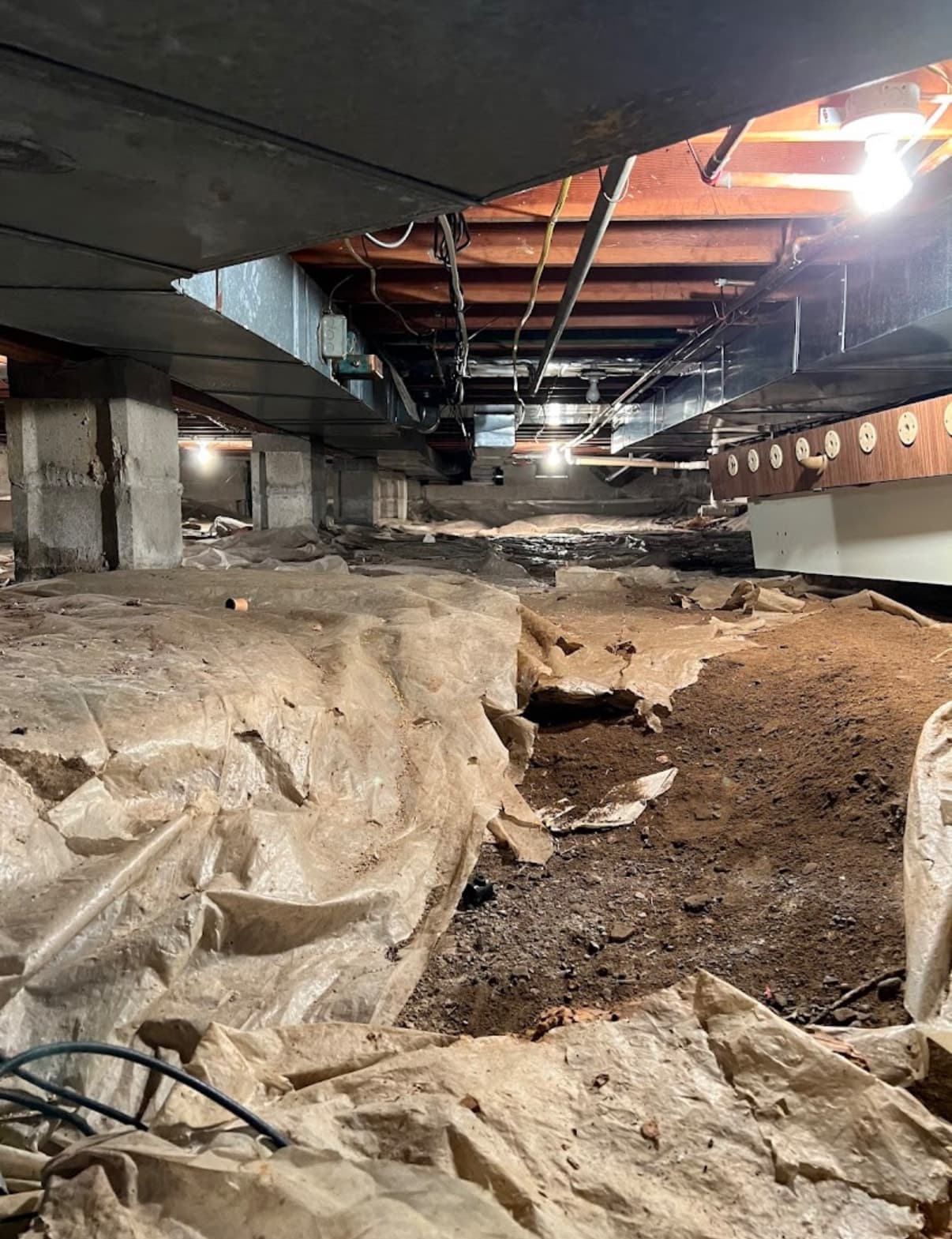
An Elmwood Village homeowner experienced an interior wall water-intrusion event in January 2025 from a roof ice-dam that backed up under the shingle line. The water tracked along framing into a finished basement living space, soaking 14 linear feet of drywall and the subfloor. The homeowner's insurance carrier (Erie Insurance) initially accepted the claim under the sudden water-damage coverage but disputed scope after the contractor identified secondary mold growth in the basement 18 days post-event.
§
Methodology
We were retained by the homeowner on Day 21 post-event for independent mold testing scoped specifically to support the insurance file. Field protocol: thermal imaging of the affected wall cavity and floor system (FLIR E60); spore-trap air sampling at three indoor locations + one exterior baseline (Air-O-Cell cassettes); surface tape-lift sampling at three visible-growth points on the soaked drywall; bulk sample of the saturated subfloor; all samples sealed with tamper-evident seals + chain-of-custody photographed at collection.
§
Lab analysis
Samples shipped same-day to EMSL Analytical (AIHA-EMLAP Lab ID 102344) for direct microscopic examination and species identification. Air-sample results returned at 4,200 spore equivalents per cubic meter (sec/m³) Stachybotrys chartarum and 1,800 sec/m³ Chaetomium globosum in the basement living area. Outdoor baseline was 80 sec/m³ for the same species. Surface tape-lifts confirmed actively growing colonies with viable spores. Bulk sample DNA-confirmed Stachybotrys with elevated mycotoxin precursor markers.
§
Species-based timing analysis
Stachybotrys chartarum is a slow-growing cellulose-decomposer that requires sustained moisture above 90% relative humidity for 7-14 days before visible colony formation; Chaetomium globosum has a similar moisture threshold and 10-21 day growth timeline. Both species being established by Day 21 post-event indicates the moisture was sustained continuously from the ice-dam intrusion. Consistent with the policyholder's claim that the water remained in the wall cavity through inadequate initial drying, rather than a pre-existing or unrelated moisture source. We documented this analysis in the report's discussion section with peer-reviewed citations.
§
Independence + scope assessment
Because we do not perform mold remediation, the scope recommendation was based purely on the environmental conditions: 14 linear feet of contaminated drywall + 28 square feet of subfloor + 3 cubic feet of underlying insulation requiring removal under containment, plus post-remediation clearance. The carrier's prior contractor scope was 8 linear feet. Our report supported the homeowner's larger-scope position.