§
Context
A Fredonia tenant in the second year of a 2-year lease on a 1955-construction single-family rental had filed a habitability complaint with the property's owner-landlord citing chronic basement musty odor, visible black-spot growth on basement walls, and an asthma diagnosis the tenant attributed to indoor mold exposure. The landlord disputed the claim, citing a prior visual inspection by a contractor that found 'minor surface mold consistent with normal basement aging in WNY.'
§
Retention
We were retained by the tenant on independent testing. Methodology identical to what we'd have used had the landlord retained us. The tenant paid the engagement fee directly. We did not communicate with the landlord or the landlord's contractor during the engagement.
§
Methodology
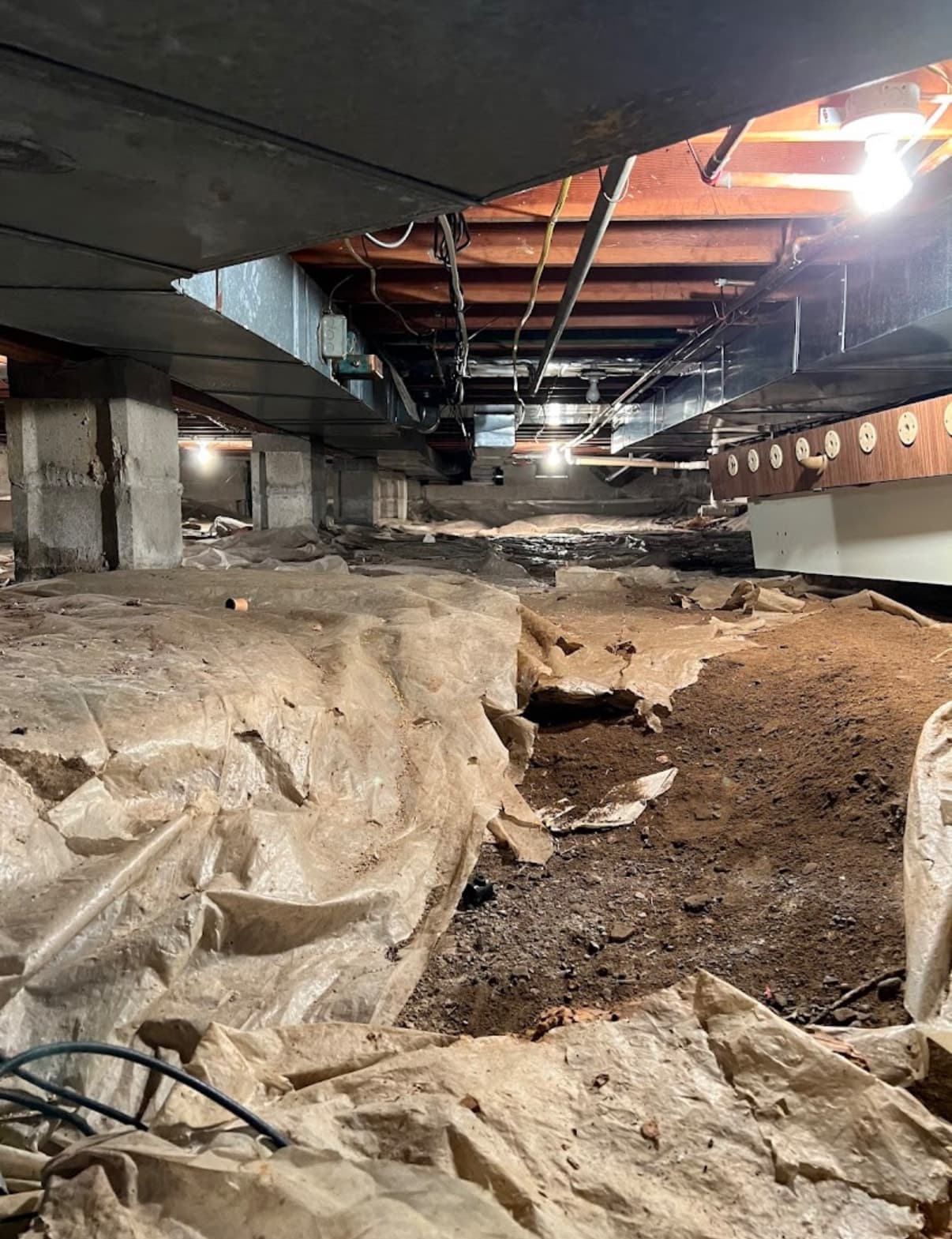
Field protocol: thermal imaging of the foundation walls revealed sustained moisture penetration along 22 linear feet of the north-facing concrete wall; moisture meter readings at 28-34% on concrete (saturated). Spore-trap air sampling at 4 indoor locations + outdoor baseline. Surface tape-lift at 3 visible-growth points on the foundation wall. Bulk sample of efflorescent material at the wall-floor joint.
§
Lab findings
Spore-trap air analysis returned Aspergillus/Penicillium at 6,400 sec/m³ in basement (outdoor baseline 240 sec/m³) plus Stachybotrys chartarum at 320 sec/m³ in basement (outdoor baseline 0). Surface tape-lifts confirmed Stachybotrys colonies on the foundation wall. Bulk sample contained Chaetomium globosum colony fragments. Multiple species + sustained-moisture-required species pattern indicated chronic, not acute, contamination.
§
Source analysis
Thermal imaging + moisture readings + species pattern collectively pointed to chronic foundation seepage from below grade. The north-facing wall is downhill on a lake-effect slope where snowmelt + groundwater infiltrate through the original (1955) concrete foundation without modern waterproofing. This was a building-system failure, not a tenant-caused moisture event.
§
Report + outcome
Our report identified the species, exposure levels, source analysis, and a scoped remediation work plan: foundation waterproofing (exterior excavation + membrane install + drain tile), interior mold removal under containment per ANSI/IICRC S520, and post-remediation clearance testing. Estimated work scope: $14,000-$22,000 depending on contractor selection.