
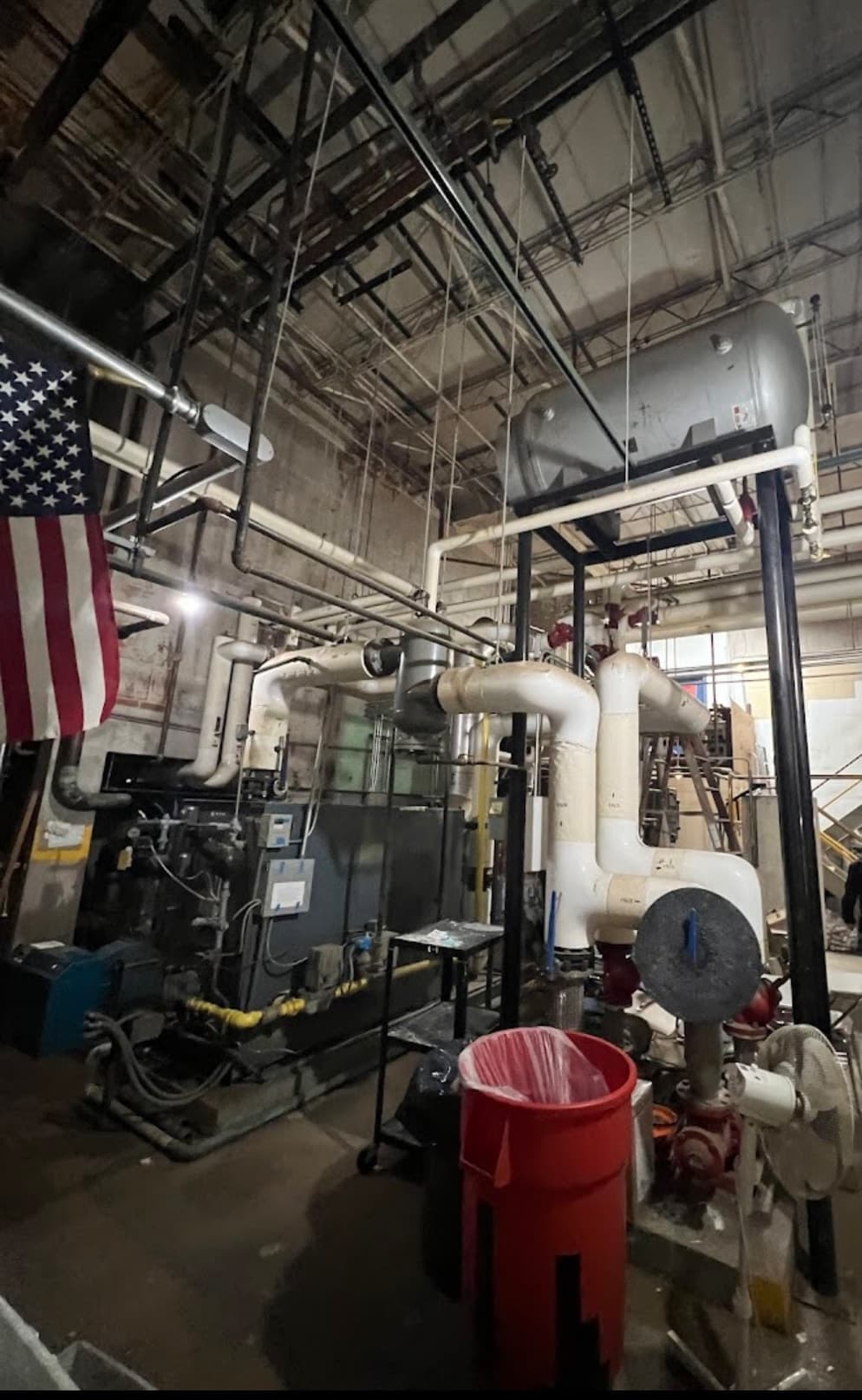
Diagnostics & Due Diligence · NY · PA
Phase I Environmental
AAI-compliant Phase I ESA satisfying lender and CERCLA due-diligence requirements. Includes historical records review, regulatory database search, site reconnaissance and interviews.
Our Process · 4 steps
How phase i environmental actually runs.
- 01
Historical aerial, Sanborn and city directory review
- 02
Federal, state and tribal database screen
- 03
Site reconnaissance and adjoining-property review
- 04
Stakeholder interviews and report production
Common Questions
About this service
What triggers a Phase II?
When to test
Triggers + situations
Phase I Environmental Site Assessment (ESA) is appropriate in five specific scenarios: (1) Commercial real estate transactions where lender requires environmental due diligence. M&T Bank, KeyBank, PNC, FNB, and most commercial lenders require Phase I above $1M loan threshold. (2) SBA 7(a) and 504 loans on commercial real estate. SBA's federal environmental policy requires Phase I regardless of loan size. (3) CERCLA Innocent Landowner / Bona Fide Prospective Purchaser defense. Buyers seeking liability protection from prior contamination must complete AAI-compliant Phase I within 180 days of acquisition. (4) Multi-property portfolio acquisition where one Phase I covers multiple parcels. Often scaled efficiently with shared research and adjacent-property assessment. (5) Voluntary due diligence for buyer protection on industrial-historical parcels where REC discovery is likely. Lovejoy and Hazelwood (Pittsburgh), Lawrenceville (Pittsburgh), Bayfront (Erie), Black Rock (Buffalo) areas all have elevated REC discovery rates. For residential transactions, Phase I is typically not required and not appropriate — single-family residential properties use the simpler standard environmental disclosure framework instead.
Methodology
Sampling + lab analysis options
Phase I ESA methodology follows the **ASTM E1527-21 standard** (effective late 2021, formally adopted by EPA's AAI rule in November 2022). The standard prescribes specific research components: **Historical research:** Aerial photographs covering 1938-present at standardized intervals (1938, 1958, 1972, 1985, 1995-onwards); Sanborn fire insurance maps; Polk city directory listings; chain-of-title documents; topographic maps. Historical photo and directory research is the highest-yield REC discovery component for industrial-historical parcels. **Regulatory database screening:** Federal databases (CERCLIS, RCRA, LUST/UST, HSWA, NPL); state databases (NYSDEC Spills Incident Database, NY DEC Brownfield Cleanup Program list, PADEP eFACTS, PA Storage Tank Database); local databases per ASTM distance criteria. **Site reconnaissance:** Physical site inspection documenting current conditions, evidence of past operations, adjoining-property observations. **Interviews:** Structured interviews with current owner, current operator, current property manager, prior owner (where available), local government records sources. **Adjacent property research:** ASTM E1527-21 distance criteria for adjoining-property regulatory review (1 mile for federal databases, 1/8 to 1/2 mile for state databases depending on contaminant type). **Report production:** Written report meeting AAI standard with Environmental Professional execution and qualifications documentation.
Regulatory framework
Standards + requirements
**Federal: CERCLA + AAI Rule** establishes the federal framework for environmental due diligence. EPA's AAI Rule (40 CFR Part 312) formally adopted ASTM E1527-21 as the AAI-compliant standard in November 2022. Phase I work issued against the older ASTM E1527-13 standard may not meet AAI requirements. **ASTM E1527-21** is the practical standard for Phase I ESA. Replaces and updates the prior E1527-13. Tighter REC definitions, updated historical research methodology, clarified vapor intrusion/encroachment language. **State frameworks:** - **NY: NYSDEC** Spills Incident Database is primary state-side data source. NYSDEC TAGM 4046 provides environmental site assessment guidance specific to NY. NYS Brownfield Cleanup Program (Article 27) provides incentives for documented-contamination acquisitions. - **PA: PADEP Act 2** (Land Recycling Program) provides regulatory framework for contaminated-site acquisition. PADEP eFACTS is the primary state-side database. PA Act 2 Standards establish cleanup objectives. **Environmental Professional qualifications:** AAI rule requires Phase I execution by Environmental Professional meeting specific qualification standards (combination of education, experience, and certification). Phase I reports include Environmental Professional qualifications documentation.
Cost
What drives the price
Phase I ESA pricing varies significantly by parcel complexity: **Standard commercial Phase I:** $2,800-$4,500 for typical commercial parcels (single-tenant or small multi-tenant, modest historical complexity). Includes all ASTM E1527-21 required research components, site reconnaissance, interviews, and written report. Standard 10-15 business day turnaround. **Complex commercial Phase I:** $4,500-$6,500 for parcels with substantial historical complexity, multi-tenant operations, or extended regulatory database review requirements. **Industrial parcels:** $5,500-$8,500+ for parcels with extensive historical industrial operations, multiple adjoining-property concerns, or complex regulatory database burden. Phase I work on former gas stations, machine shops, dry cleaners, and small-scale manufacturing parcels typically scales here. **Multi-parcel portfolios:** Per-parcel cost decreases with portfolio size due to shared research and adjacent-property efficiencies. Typical multi-parcel pricing $1,800-$3,200 per parcel for portfolios of 5+ adjacent or related parcels. **Phase I + Phase II progression:** When Phase I identifies RECs requiring Phase II investigation, Phase II scope and pricing depend on REC specifics. Phase II typically $4,500-$25,000+ depending on parcel complexity, sample point count, and analytical complexity. Rush turnaround (7-10 business days vs. standard 10-15) adds 25-40% to base pricing.
Common mistakes
What to avoid
Patterns we see in phase i environmental engagements — both at the buyer level and at the practitioner level. Each pairs the mistake with the right move.
Mistake
Accepting reports issued against ASTM E1527-13
Correction
ASTM E1527-13 may not meet current AAI rule requirements. Lenders increasingly require E1527-21 issuance. Verify standard reference in any Phase I you accept.
Mistake
Skipping the Polk directory and Sanborn map research
Correction
These are the highest-yield REC discovery sources for industrial-historical parcels. Pre-1990 dry-cleaner and machine-shop operations often appear only in directories.
Mistake
Inadequate adjoining-property research
Correction
ASTM E1527-21 distance criteria require structured adjoining-property regulatory review. Skipping this creates AAI compliance gaps.
Mistake
Treating absence of NYSDEC Spills records as definitive 'no REC'
Correction
Many historical operations never produced spill reports. Polk directories + Sanborn maps + city historical records + interviews are the cross-checks.
Report contents
What you receive
The Phase I ESA report includes: executive summary with REC findings, historical research summary (aerial photographs, Sanborn maps, Polk directory, chain-of-title), federal/state/local regulatory database screening results, site reconnaissance observations with photographs, adjoining-property assessment, structured interview summaries, RECs identification with rationale, recommendations (no further investigation, Phase II progression with scope, specific further research), Environmental Professional qualifications documentation, appendices with raw regulatory database printouts and historical research source materials. AAI compliance language explicitly cited. ASTM E1527-21 standard reference throughout. Suitable for lender file submission, SBA loan file submission, CERCLA defense documentation, or buyer due diligence file.
Related scope
When to bundle additional testing
Phase I findings drive Phase II scope decisions. RECs identified in Phase I typically progress to Phase II subsurface investigation (soil borings, monitoring wells, soil-gas sampling, vapor intrusion assessment). Phase II findings drive Phase III remediation scoping where contamination is confirmed. Phase II + Phase III work is typically a 6-month to 2-year engagement following Phase I completion. We coordinate Phase II + Phase III progression from Phase I in the same firm — buyers benefit from continuity of investigation rather than onboarding multiple firms across the multi-phase progression.
Related Services
Often paired with phase i environmental.
Most engagements involve more than one analyte. These services are commonly scoped alongside phase i environmental.
Phase II Environmental
Targeted sampling to confirm or refute Phase I findings.
Phase III Environmental
Remediation oversight and regulatory closure support.

Soil Testing
Targeted soil analysis for heavy metals, petroleum and pesticides.
Asbestos Testing
NYS-certified asbestos surveys for homes, schools, and commercial buildings.
Radon & VOC Testing
Short-term and long-term radon plus VOC speciation.
Lead Paint Testing
XRF and dust-wipe testing for homes built before 1978.
Related reading
From our case files and guides
- Case studyBuffalo Phase I ESA, Former Dry Cleaner RECA Buffalo commercial real estate buyer retains Phase I ESA on a Lovejoy parcel. Historical research reveals 1972-1996 dry cleaner operations + tetrachloroethylene (PCE) Recognized Environmental Condition. Phase II progression documents.Read it
- GuideASTM E1527-21 Lender Requirements, M&T, KeyBank, PNCASTM E1527-21 is the current Phase I Environmental Site Assessment standard (post-November 2022 EPA AAI rule). This guide walks through what regional lenders M&T Bank, KeyBank, PNC, and FNB actually require for commercial real estate environmental due diligence.Read it
- GuideFHA / VA / Conventional Environmental Testing 2026Federal-backed home loans (FHA, VA) and conventional loans have different environmental testing requirements. This guide explains current 2026 requirements for radon, lead paint, mold, and asbestos across loan types.Read it
Schedule · 48hr appointment
Unsure about your air? Schedule a test.
48-hour appointment window. 24-hour lab turnaround. Licensed inspectors, unmarked vehicles, statewide coverage in NY and PA.