
Testing & Inspection · NY · PA
Radon & VOC Testing
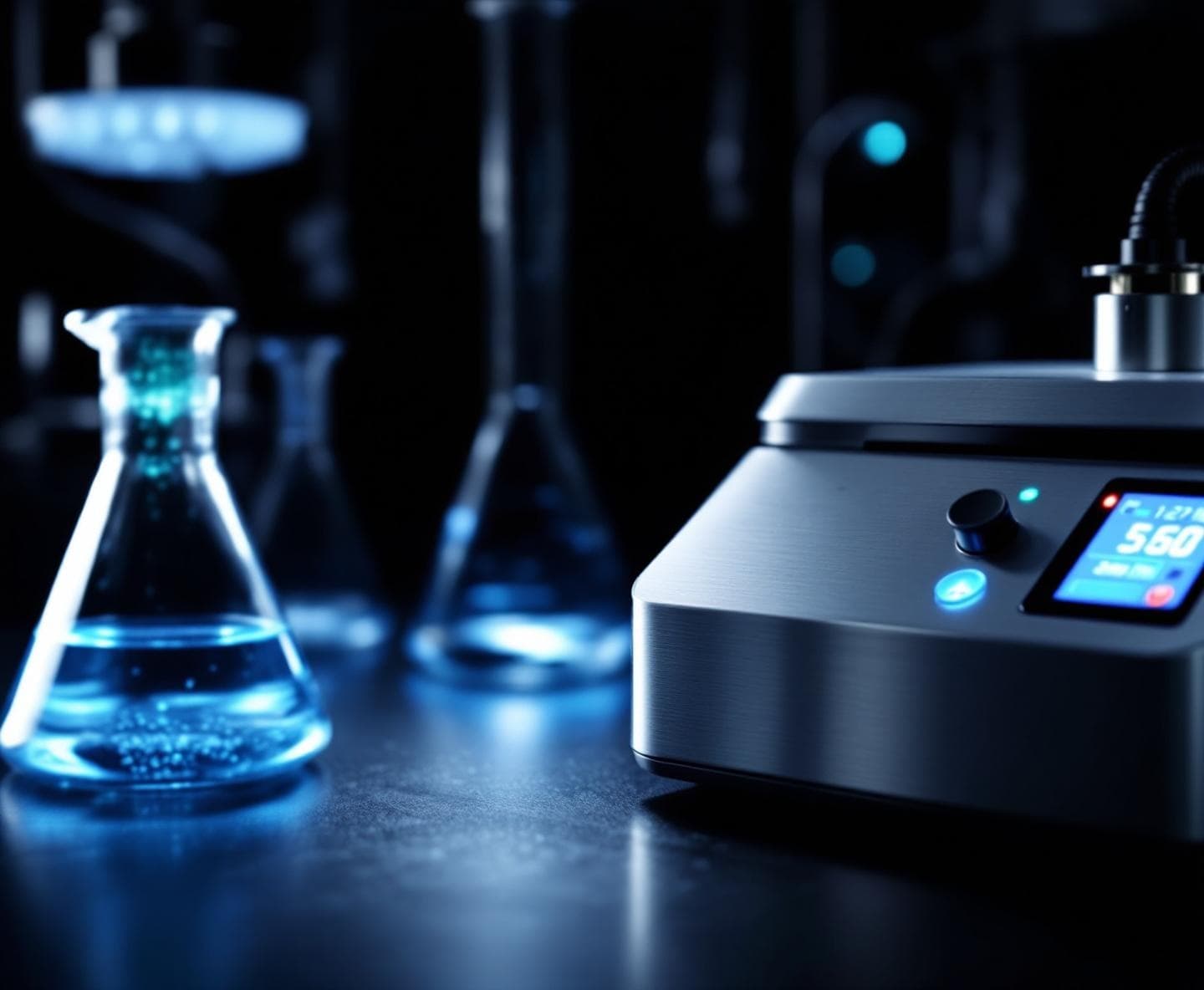
Continuous radon monitors for 48-hour real-estate testing, plus passive devices for long-term measurement. VOC testing identifies airborne chemicals from finishes, off-gassing materials, or contamination events.
Our Process · 4 steps
How radon & voc testing actually runs.
- 01
Device placement following EPA closed-house protocol
- 02
Continuous monitor logging or passive collection
- 03
Lab analysis (VOC) or instrument download (radon)
- 04
Report with mitigation guidance if elevated
Common Questions
About this service
What radon level requires mitigation?
When to test
Triggers + situations
Radon testing is appropriate for several distinct situations: (1) Real estate transactions in EPA Radon Zone 1 or Zone 2 counties (most of Western NY and Western PA fall in these zones). FHA-insured loans accept radon documentation per EPA short-term protocol. Conventional lenders accept third-party CRM (continuous radon monitor) reports for closing files. (2) Pre-purchase decisions on properties built before 1980 without active sub-slab depressurization. Pre-1980 construction typically lacks modern radon-resistant construction techniques (vapor barriers under slabs, sealed sump pits, sealed crawlspace floors). (3) Post-purchase baseline testing on any property to establish ongoing exposure conditions. EPA recommends testing every 2-5 years even after initial-test clearance. (4) Post-mitigation verification after sub-slab depressurization or other mitigation system installation. PA DEP requires post-mitigation testing within 30 days of system activation. VOC testing is appropriate for: new-construction off-gassing complaints (paint, sealant, adhesive, cabinetry, flooring emissions), suspected industrial contamination on commercial parcels (Phase II ESA scope), persistent occupant symptoms of chemical odor or irritation, and post-renovation environmental verification.
Methodology
Sampling + lab analysis options
**Radon: continuous radon monitor (CRM)** is the lender-accepted standard. We deploy Sun Nuclear 1028 or RadStar RS300 continuous monitors for 48 hours under closed-house conditions per EPA short-term protocol. Hourly readings recorded; average reported in pCi/L. PA DEP requires certified instrument calibration within 12 months. CRM produces hour-by-hour data unavailable from passive testing methods. **Radon: passive charcoal canister kits** are appropriate for personal-awareness testing but generally not lender-accepted for closing documentation. Free Allegheny County Health Department kits are legitimate but lack chain-of-custody documentation. Cost-effective but data quality is lower than CRM. **Radon: alpha-track detectors** are used for long-term testing (90+ days). Useful when initial short-term testing shows borderline results and longer-term average is needed for confident interpretation. **VOC: EPA Method TO-15** uses Summa canister sampling over 8-24 hours and analyzes 60+ compounds via gas chromatography-mass spectrometry. Best for general IAQ assessment and broad-spectrum chemical investigation. **VOC: EPA Method TO-17** uses sorbent tube sampling for targeted compound detection with lower detection limits. Better for known-target investigations (specific solvent, fuel hydrocarbon).
Regulatory framework
Standards + requirements
**Radon federal: EPA** recommends action at 4.0 pCi/L and consideration at 2.0-4.0 pCi/L. EPA does not regulate residential radon testing or mitigation directly but publishes protocols and standards. **Radon Pennsylvania: PA DEP Radon Division** regulates radon mitigation under the Pennsylvania Radon Certification Act. Radon Mitigation Specialist (RMS) certification required for any mitigation work in PA. PA DEP maintains certified-contractor database. CRM testing requires PA DEP-certified instruments. **Radon New York: NYS Department of Health** publishes guidance but does not impose certification requirements equivalent to PA. NY uses EPA short-term protocol as the practical standard. **AARST (American Association of Radon Scientists and Technologists)** publishes industry-consensus protocols for radon measurement (ANSI/AARST MAH-2019, MS-PC-2014). **VOC: EPA TO-15 / TO-17** methods establish lab analytical standards. **ASHRAE 62.1** ventilation standards provide indoor air quality benchmarks. **ATSDR Minimum Risk Levels (MRLs)** provide health-screening thresholds for specific compounds.
Cost
What drives the price
**Radon testing pricing:** 48-hour CRM standard pre-purchase or post-mitigation engagement $185-$245 per location. Multi-location deployments (commercial buildings, multi-family) scale based on monitor count. Long-term alpha-track testing $125-$185 per device with 90+ day deployment. Bundled with mold + asbestos transaction testing typically saves $75-$125 vs. separate radon engagement. **Radon mitigation referral:** We don't perform mitigation but typical PA DEP-certified RMS contractor pricing for active sub-slab depressurization (ASD) systems: $1,200-$2,800 for residential single-family installation. Post-mitigation verification re-test through us: $185. **VOC testing pricing:** TO-15 Summa canister single-location 8-hour sampling $385-$585 per sample including lab analysis. Multi-parameter IAQ panel (CO2, CO, particulates, formaldehyde, VOCs, RH, temperature) $585-$985 per location depending on deployment duration. TO-17 sorbent tube targeted analysis $295-$485 per sample. Combined radon + IAQ panel for new-construction commissioning or commercial-property assessment $895-$1,485 per location depending on scope.
Common mistakes
What to avoid
Patterns we see in radon & voc testing engagements — both at the buyer level and at the practitioner level. Each pairs the mistake with the right move.
Mistake
Using a free county charcoal kit for lender documentation
Correction
Most lenders require CRM with chain-of-custody and calibrated instrument data. Free kits lack this documentation infrastructure.
Mistake
Testing during open-house conditions
Correction
EPA short-term protocol requires closed-house conditions for 12 hours pre-test and throughout the 48-hour test period. Violations invalidate results.
Mistake
Treating one elevated reading as definitive
Correction
Radon levels vary daily and seasonally. Borderline initial results often warrant long-term alpha-track testing for confident interpretation.
Mistake
Skipping post-mitigation verification
Correction
Active sub-slab depressurization systems can fail (fan failure, blockage, air leak). Post-mitigation testing verifies the system achieved the target reduction.
Report contents
What you receive
**Radon report contents:** Executive summary with EPA threshold comparison; hourly reading log showing concentration variation over the 48-hour measurement period; closed-house compliance documentation; PA DEP-certified instrument calibration record; methodology section citing EPA short-term protocol; chain-of-custody documentation; recommended next action (no mitigation needed, mitigation recommended with referral to PA DEP-certified contractor, long-term confirmation testing suggested). Lender-formatted summary suitable for closing file inclusion. **VOC/IAQ report contents:** Multi-parameter data table with concentration vs. ASHRAE 62.1 and ATSDR MRL benchmark comparison; source-pattern analysis interpreting compound mix; methodology citing TO-15 or TO-17; lab analytical report; recommended next action (ventilation adjustment, source removal, additional targeted testing).
Related scope
When to bundle additional testing
Radon testing engagements often pair with mold + asbestos testing in transaction-stage bundles. Properties with elevated radon warrant mitigation referral plus post-mitigation verification testing. VOC findings often warrant follow-up TO-17 targeted testing if TO-15 broad-spectrum identifies specific concerning compounds. Phase II ESA progression from Phase I findings frequently includes soil gas VOC sampling alongside the radon and mold panels.
Related Services
Often paired with radon & voc testing.
Most engagements involve more than one analyte. These services are commonly scoped alongside radon & voc testing.
Indoor Air Quality Testing
Comprehensive IAQ panels for residential and commercial spaces.
Mold Testing & Assessment
Air, surface, and bulk mold sampling with moisture mapping and contractor scope of work.
Phase I Environmental
ASTM E1527-21 Phase I assessments for property due diligence.
Related reading
From our case files and guides
- Case studyPittsburgh Radon Mitigation, 12.4 pCi/L to 1.9Squirrel Hill home, pre-1980 construction, initial 48-hour continuous radon monitor result of 12.4 pCi/L. Three times the EPA action threshold. Documents the mitigation system design, install, and post-mitigation clearance test result.Read it
- GuideRadon Mitigation Cost, Allegheny County 2026Allegheny County is EPA Zone 1. Average indoor radon is higher than the national average. Mitigation costs vary widely. This guide breaks down current Allegheny County mitigation pricing by system type, contractor experience, and home characteristics.Read it
Schedule · 48hr appointment
Unsure about your air? Schedule a test.
48-hour appointment window. 24-hour lab turnaround. Licensed inspectors, unmarked vehicles, statewide coverage in NY and PA.