
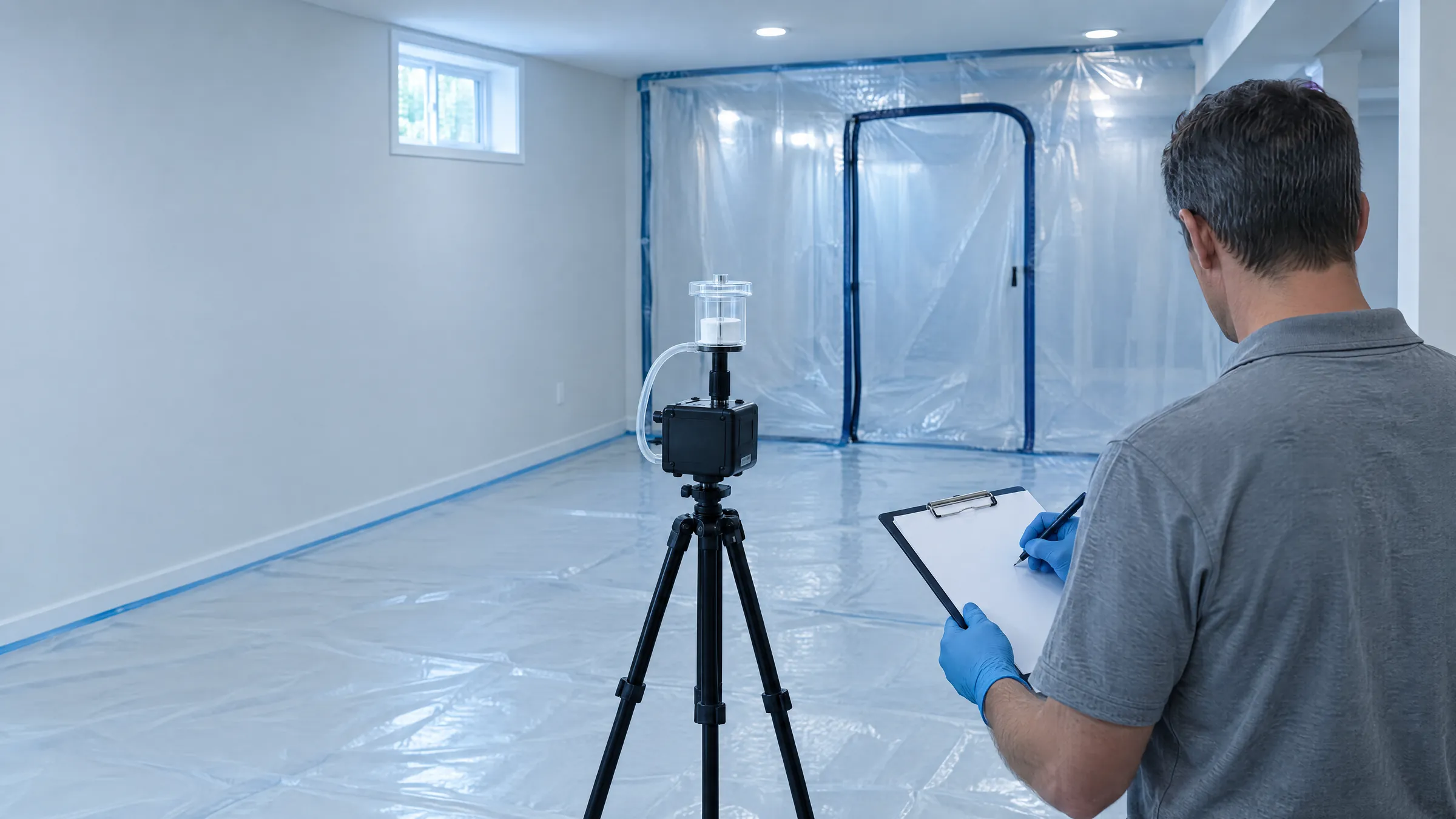
Mold remediation plans and clearance · NY
Mold removal in Buffalo starts with a licensed assessor's plan
Found mold, or had water get in? Call (716) 410-6767 today. The EPA says to dry wet materials within 24 to 48 hours of a leak or flood to prevent mold growth. We write the remediation plan, help you hire the separately licensed contractor who does the removal, oversee the job and run clearance testing, a retest once the work is done.
- NYS DOL Mold Assessment Contractor License25-61XEN-SHMO, Environmental Air Solutions, LLCLook it up: NYS mold license register on data.ny.gov (opens in a new tab)
- NYS DOL Mold Assessor License25-61OFY-SHMO, Mason BridgesLook it up: NYS mold license register on data.ny.gov (opens in a new tab)
- NYS Asbestos Inspector Certificate26-61RJ4-SHAB, Mason BridgesLook it up: NYS asbestos certificate register on data.ny.gov (opens in a new tab)
- CIEC, Council-certified Indoor Environmental ConsultantMason A. BridgesLook it up: ACAC certified professional directory (opens in a new tab)
- Family-owned and operated
- Unmarked vehicles
Water got in this week? Drying can't wait. If mold has spread past 10 square feet, the assessor (the person who inspects, tests and writes the plan) has to go first, before any removal starts. We'll tell you over the phone whether you need us at all, so call now about your mold or water damage. The first call is a free consultation.
We're the testing and planning side. In New York a separately licensed remediation contractor does the removal. Our own state license is for assessment: New York State Mold Assessment Contractor license 25-61XEN-SHMO, which you can check on the state license lookup.
Mason Bridges is the assessor on our team. He holds New York State individual mold assessor license 25-61OFY-SHMO (state record), and the American Council for Accredited Certification (ACAC) lists him as a Council-certified Indoor Environmental Consultant (CIEC).
Past 10 square feet, the plan comes first, and we write it
Mold work on more than 10 square feet, a patch bigger than roughly 3 feet by 3 feet, is a regulated project under New York's mold law. The EPA advises professional help past that size or after a lot of water damage, and the state health department adds a home where someone is highly sensitive to mold.
On a job that size, we go first. We come out, inspect the affected areas and look for where the water is getting in. Then we write the plan for your address, and the contractor writes its own work plan. The Department of Labor's consumer guide puts the order plainly: hire the assessor first, then a remediation contractor.
The county won't do it for you. The Erie County Department of Health says it cannot perform mold testing or assessment, so homeowners hire a private licensed assessor.
Here's who does what, in order:
| Stage | You | Us | Remediation contractor |
|---|---|---|---|
| Plan | Call us, give us access | Assess the home, write the plan | Not hired yet |
| Hire | Choose the contractor | Help you check the license and work plan | Hands you a written work plan |
| Work | Ask us about anything that looks off | Oversee the work | Removes the mold inside containment (the sealed-off work area) |
| Clearance | Wait for the result | Test, write the clearance report | Leaves containment up |
| Sign-off | Keep the report | Walk you through it | Takes containment down |
Not sure how big it is, or whether it's mold at all? Call us first at (716) 410-6767 and describe what you see. If nothing is visible yet, start with mold testing, or read about mold testing after water damage.
New York keeps testing and removal apart, and that works in your favor
New York law says one licensee may not perform both the assessment and the remediation on the same property, and no one may own an interest in both companies on that property.
So the person testing your home has no reason to make the problem look bigger, or to call the job finished early.
How to hire a licensed remediation contractor in New York
A license is required to perform or advertise mold remediation in this state. Before you sign, ask for three things:
- Their Department of Labor mold remediation license number. Look it up yourself on the state lookup. The state health department gives the same advice.
- The written work plan, before work starts. State law has the contractor give it to you before the remediation begins. Read it side by side with ours.
- A few references from recent jobs. Then call them.
Already holding contractor quotes but no plan? Call (716) 410-6767 before you sign anything, and we'll start on the scope their work has to follow. Once it's written down, every contractor you call is pricing the same job. Our own quote for the assessment comes up front, with no hidden fees.
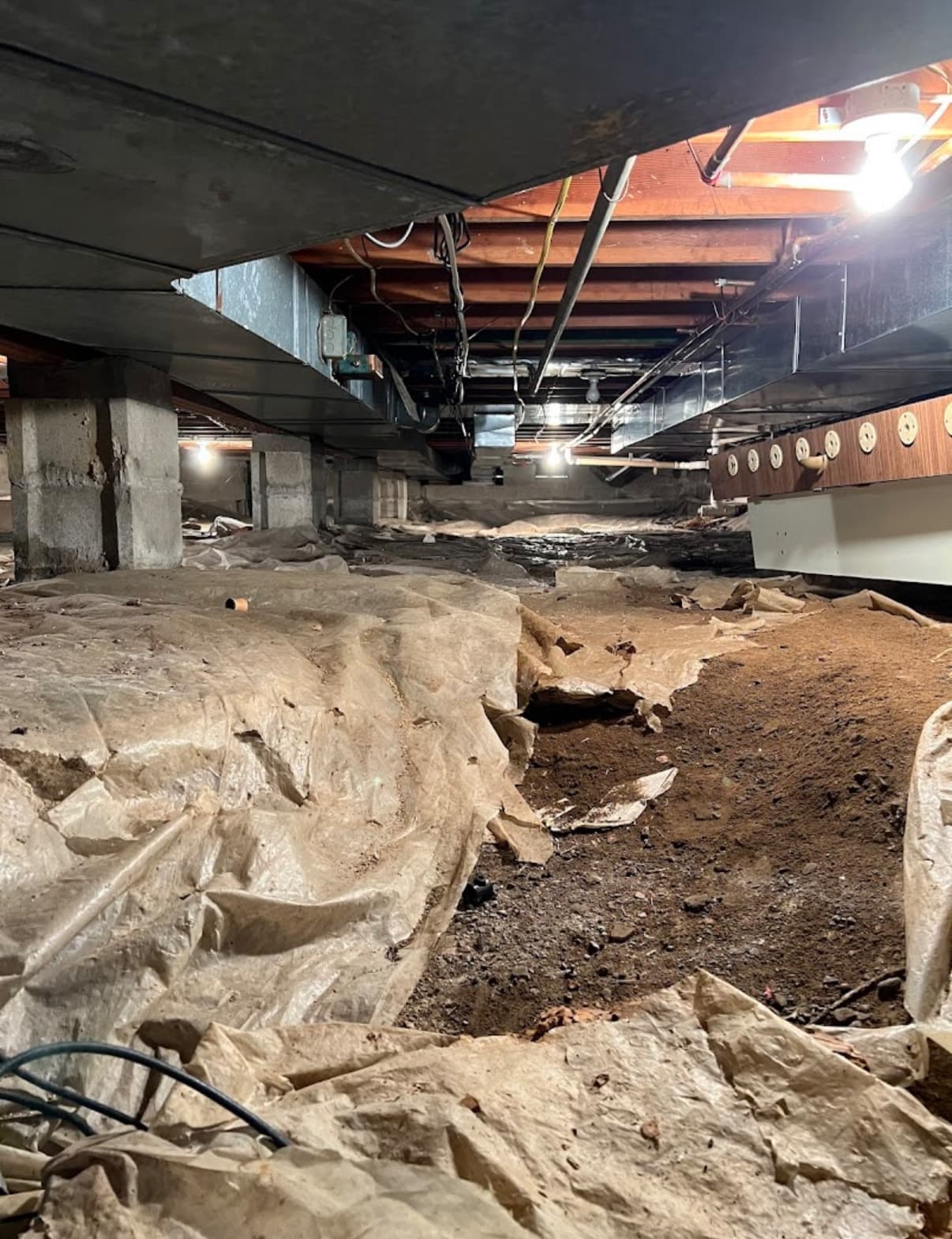
What we do while the contractor works
We oversee the job against the plan we wrote. If you're standing outside the plastic sheeting wondering whether something looks right, ask us, and if the work drifts from it, we'll flag it.
Clearance testing is how you know the work passed
Under state law, post-remediation clearance is done by a mold assessment licensee and documented in a clearance report.
The EPA says no federal limits define a safe level of mold, so sampling results are compared with outdoor samples. Our clearance report documents what we found after the work, in writing you can keep.
Work already done by someone else? Book independent clearance testing.
Older Buffalo houses and where the water gets in
In the city of Buffalo, the median home was built in 1938, per U.S. Census figures. The Southtowns get the heavier snow. NWS Buffalo says areas south of Buffalo receive much more lake-effect snow than locations to the north, and in November 2022 it recorded six to six and a half feet of snow over two and a half days in Hamburg, Blasdell and Orchard Park.
The Erie County Department of Health says mold is most likely where there is water or dampness, such as a basement, and that moisture problems in buildings often come from a leaking roof or gutters. In an older house we look for where the water gets in, not just where the mold shows.
In Orchard Park the order is the same: plan, licensed removal, clearance. See our Orchard Park page, or our Buffalo page for the city.
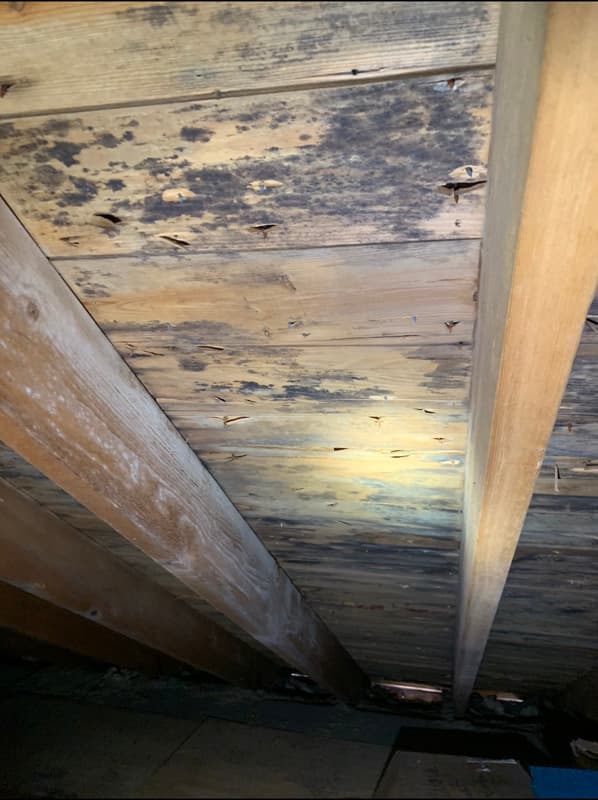
Talk to an assessor before you hire anyone
Call (716) 410-6767 and tell us what you found and where. Ask for the free consultation. Our hours are Monday to Friday, 8 AM to 6 PM, and Saturday and Sunday, 10 AM to 4 PM, and we can schedule visits for evenings and weekends. We're a local, family-owned and operated business.
Near Erie or Pittsburgh, Pennsylvania? Pennsylvania has no state mold regulations, per the PA Department of Health, so New York's licensing steps don't carry over. Call with the address and we'll settle what applies at that address.
Drywall or carpet still wet? Don't wait on it. The EPA's window for drying wet materials is 24 to 48 hours.
Common questions
Questions about mold remediation
How long does mold remediation take?
The job is finished when we issue a passed clearance report, not when the contractor packs up. Count on clearance testing as part of the schedule, and expect the plan to set the pace: the size of the area and the work it calls for decide how long removal runs. We'll talk timing once we've seen the job.
Can I clean up the mold myself?
Sometimes. The EPA says an area under about 10 square feet, roughly 3 feet by 3 feet, can usually be handled by the owner. Past that, or after a lot of water damage, it advises professional help. Owners working on their own home are exempt from New York's licensing rules, but a sensitive person in the house is a reason to call a professional.
Do you also perform remediation, or would that be a separate professional?
A separate professional: a licensed remediation contractor does the removal, while we write the plan, oversee the job and run the clearance test.
Will you perform the mold tests again after the remediation to make sure it was successful?
Yes. That retest is the clearance test: we test the work area after the contractor finishes and put the result in a clearance report.
How likely is mold to come back after remediation?
Mold comes back when the water does. The EPA says the key to mold control is moisture control. If the roof, gutter, plumbing or sump problem that let water in is not fixed, removal only buys time. When the source isn't obvious, we look for where the water is getting in.
Is it safe to stay in a house during mold remediation?
The CDC says people with asthma, allergies or weakened immunity can react more severely to mold, so who lives with you matters as much as where the work is. If anyone at home fits that, tell us before the plan is written so it can account for them. The work area stays sealed off until a clearance test passes.

Schedule a consultation
Unsure about your air? Schedule a test.
Talk it through with a New York State licensed professional. Family-owned and operated. Unmarked vehicles.